Residential Building Design and Construction in Nepal: Trends, Challenges, and Future Prospects
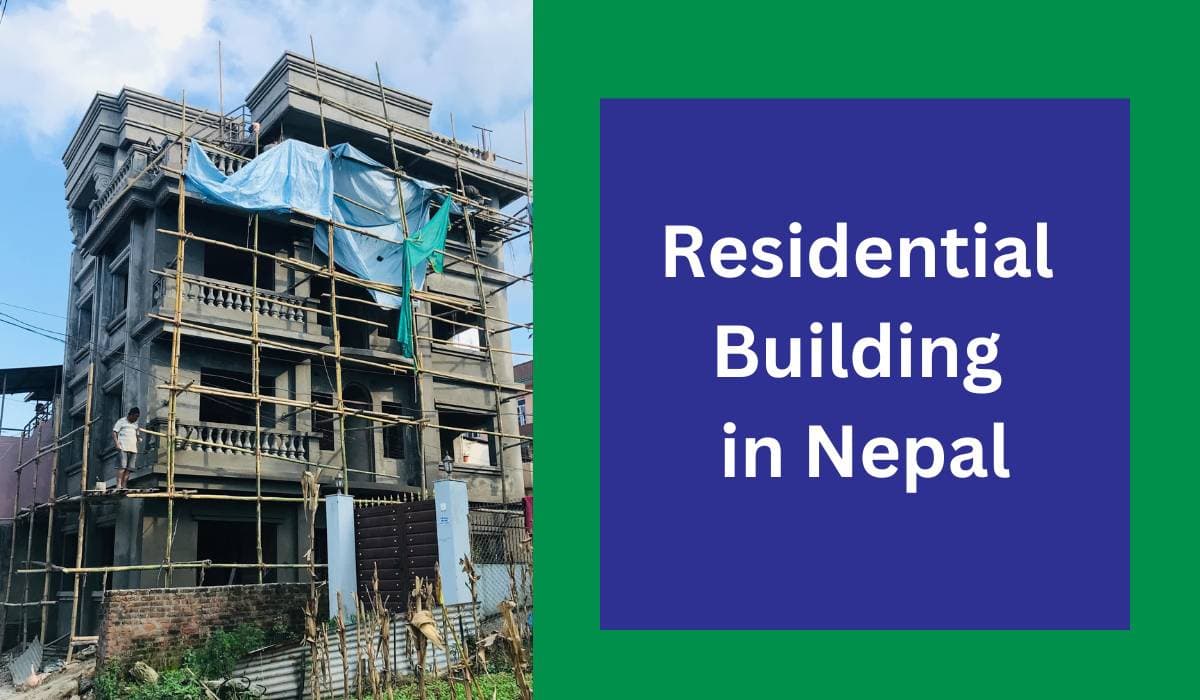
Nepal is a beautiful country with diverse landscapes ranging from towering Himalayas to fertile lands. Due to its diversity, Nepal is experiencing rapid urbanization, especially in cities like Kathmandu and Pokhara. Due to urbanization, there is now a great demand for residential buildings design in Nepal.
In Nepal, people are not only building homes for a living but also for long-term investment, such as renting, which is famous in cities. So, if you are curious about residential building design in Nepal, this guide is for you. We will try to give you every information that you need while building a residential building.
Overview of Residential Building Design Trends in Nepal
As we can see, building construction has changed greatly in city areas after the earthquake. Rapid urbanization has increased the demand for housing, as we can see in the city areas, where multi-story buildings, gated communities, and apartment complexes are also increasing slowly. In rural areas like villages, traditional homes are also being built using mud, stone, and wood.
As we all can see many people are migrating to cities for better jobs, and the need for affordable, safe, and sustainable housing has become more critical. The one who wants to invest in a residential house in Nepal must understand these trends.
Importance of Housing in Nepal’s Urbanization
Housing plays an important role in Nepal's ongoing urbanization. As people from rural areas move to cities, the need for organized residential building designing and construction solutions has also increased. As city areas become more crowded, organized and well-planned residential buildings can offer better standards, enhance community life, and contribute to a more sustainable future for Nepal.
Types of Residential Buildings Design in Nepal
In the context of Nepal, residential buildings design vary depending on location, family needs, and budget. Some of the types of homes you will find are discussed below:
Single-Story Houses
In Nepal, single-story houses are common in rural areas and smaller towns. These houses are generally built using local materials like mud, stone, or bricks. For the limited financial resources, these houses are the best because they provide simplicity and affordability.
Multi-Story Apartments
Like Kathmandu, (which is an urban area) there is a huge demand for multi-story apartments. For metropolitan areas like Kathmandu, multi-story flats are best. Why these are the best ideas?
No idea. Then just listen, in urban areas, there is limited land space and has to accommodate more people in limited land, making it ideal for city living. Depending on the location and design, the multi-story apartments can be made affordable and luxurious.
Duplex and Townhouses
Talking about the duplex and townhouses, are more popular choices for middle-class and upper-middle-class families. These houses are suitable for those who do not have joint families and live in a single family. Duplex and Townhouses are best for families who want more space and want to stay close to city amenities.
Traditional Nepali Homes (Mud and Brick Structures)
In rural areas, now also we can see traditional houses although modern residential houses dominate in urban areas. Traditional houses use mud and brick with thatched roofs. These are the houses which reflect the country’s heritage and local building techniques too.
Key Factors Influencing Residential Building Designs
Building the residential is not the best thing, properly building the residential knowing all the things like where to build, how to build, and when to build, is the best thing. So, when planning a residential house in Nepal, you need to consider several things for successful design.
Below we have mentioned some points to help you:
Climate and Geography of Nepal
Climate and geography play a vital role in residential building design. I am saying this because in Nepal there is a climate that means in Himals there is snowfall and building a house like in Terai is not suitable and designing a house in the Himalayas is not suitable for Terai regions.
The overall design of your house depends on local climatic conditions which influence roof designs, wall materials, and overall structure.
Cultural and Religious Influences
Nepal is rich in culture and tradition that what we all know. So, cultural traditions and religious beliefs may influence the residential designs. As we can see in Kathmandu there are many Newari-style houses. This is one of the examples. Another aspect is that many people in Nepal now also have a belief in Vastu shastra which is an architecture science, so they follow it and build their residences accordingly.
Local Building Materials
As I have already mentioned the types of residential buildings design in Nepal, in rural areas, residential houses in Nepal are often made using mud, stone, and bamboo. Whereas in urban areas, steel, concrete, glass, and bricks are more common. It means that the availability of materials also plays a crucial role in building houses.
So, the cost and sustainability of residential buildings design in Nepal are influenced by the use of locally sourced materials.
Sustainable and Eco-friendly Design Trends
With the growing concern for the environment, sustainable and eco-friendly designs are becoming more popular. Many new residential buildings design in Nepal are being designed with energy efficiency in mind, incorporating solar panels, natural ventilation, and water-saving technologies. These features not only reduce environmental impact but also lower long-term living costs.
Challenges in Residential Building Construction in Nepal
In every work, there come challenges attached to it. If you are scared of the challenges then you cannot start your business. Building a home in Nepal also comes with some set challenges. Below we have tried to explore some challenges you might face during residential building in Nepal.
Land Scarcity and High Costs
As we all know the price of everything in Nepal has taken off from land to sky. It means that from small things to bigger things the price is increasing slowly day by day. This effect is mostly seen in urban areas like Kathmandu.
As urbanization is increasing and more people are moving to city areas land prices have also increased and land scarcity also increasing. Increasing the cost of land construction and the scarcity of land, for the average person it is difficult to purchase a home.
In such cases, the builders construct multi-story residential building design in which such people can accommodate within limited spaces. So, it can be one of the challenges.
Natural Disasters (Earthquakes, Landslides, Floods)
Nepal is a beautiful country that we all know. But do you know that Nepal is prone to natural disasters? I think everybody knows this. Recently also we faced heavy rainfall just before Dashain which is on 2081-06-12. In which many people died due to the flood, and landslides. And many people became houseless.
Similarly, the case of 2072-01-12 was the black day for Nepalese people. On that day 7.8 Richter scale earthquake occurred and so many people died, manu building collapsed on that day. Why I am saying such things?
I am saying such things because natural disaster is the major challenge in residential building design in Nepal. Seeing and observing such things one must design and construct residential houses. So, it is one of the challenges.
Infrastructure and Utility Issues
As Nepali, we have great experience with infrastructure and utility issues. Due to unreliable utility systems, we face many problems with water supply, sewage, and electricity. With such issues, many builders and owners invest in private solutions ensuring that their residential building design have access to basic amenities. It is another challenge.
Rules and Paperwork
In Nepal, the work we do like making citizenship, passports, official work anything under the government happens in a slow process, This is one of the challenges for residential building. Before building a residential building we need approval from the government then only we can build buildings (which can be slow).
Another comes to the rule, due to the complex laws, the builders who are investing money must know the rules which may delay construction projects as well.
All the above challenges we mentioned are the challenges we have faced during construction. So, hope you will consider all these challenges while building residential in Nepal
Construction and Design Considerations
With the challenges you also must consider several key factors when planning the construction of a residential house in Nepal. Some of the key factors we must take into account to ensure a safe and functional home are:
Site Selection and Planning
In our view, the first thing you should consider when constructing residential in Nepal is site location. Site location is most important in view that if the land is in a sloped area then there is a risk of a landslide and the location of the site for eg. if there is no hospital, schools, or shops near the site of land you purchase then think how will be your life.
Thinking all these site selection is a most important key factor for consideration.
Structural Safety and Earthquake Resistance
After the earthquake in 2015, in urban areas, considering earthquake many houses were built and are being built in city areas as well as in many rural areas also.
By this statement, we mean to say that while building a house one must consider the structural safety with earthquake into account.
Interior Design Trends in Nepalese Homes

Everybody can design a house but those who can design a house according to the customer's needs or own house is the best one. In Nepal, now there is a growing trend in the interior design of houses, blending traditional styles with modern influences.
This design is done to make a standard house within limited space.
Recent Trends in Residential Building Designs and Construction in Nepal
Nepal’s residential building style is changing rapidly. Below we have provided some recent trends:
Growth of High-Rise Buildings in Urban Areas
Now city areas like Kathmandu are becoming more crowded and there is a high demand for high-rise buildings. Those buildings are ideal for urban living because they provide multiple units on a single plot of land. High-rise buildings are often built with modern amenities, offering luxury and convenience.
Rise of Gated Communities and Luxury Apartments
Those who are high-graded, are living and want to live in gated communities or in luxury apartments. These trends of living are becoming more popular in city areas. In these, there will be privacy, security, and exclusive amenities like gyms, parks, and pools
Smart Homes and Technological Integration
As technology is changing, the design of residential buildings is also changing. This means that from the traditional way of residential people are moving to smart homes with automated lighting, security systems, and voice-activated controls, which are becoming more interesting and common in construction projects.
Cost of Residential Building in Nepal
The cost of residential buildings in Nepal can vary depending on several factors. We have tried to give you some cost breaking down it:
Price Range for Various Types of Residential Buildings
Talking about the cost of the building depends on its size, location, and design. For example, a single-story house in a rural area will cost less compared to a modern apartment or multi-story house in a city. On average, the price may vary from NPR 15,000 to NPR 25,000 per square foot.
Factors Affecting the Cost of Construction
Several factors can affect construction costs, like material choice, labor costs, and land prices. Other factors like bricks, cement, and wood can also impact the overall cost.
Cost of Material (estimated)
Below are current market rates for major construction materials commonly used in residential building projects in Nepal. Prices can vary slightly by city, supplier, and quality but these reflect the most reliable recent figures:
- Cement (50 kg bag): NPR 850 – 1,100 per bag (OPC/PPC)
- TMT Steel Bars: NPR 64 – 86 per kg (varies by brand & grade)
- Bricks: NPR 15 – 25 per piece
- Sand (River sand per tipper): NPR 27,000 – 28,000
- Pebbles/Coarse Aggregate (per tipper): ~NPR 30,000
- Concrete Blocks (alternative to bricks): NPR 35 – 45 per piece
- Ready-Mix Concrete: NPR 8,500 – 10,500 per m³
- Plumbing Pipes: NPR 80 – 400 per foot (PVC/GI)
- Electrical Wires: NPR 30 – 80 per meter
Note: These are material prices only — finishing, labor, permits, and taxes are separate costs. Always check with local suppliers before final budgeting as prices can fluctuate based on supply, location, and season.
Conclusion
Nepal is rapidly evolving, shaped by urbanization, cultural influences, and environmental challenges. People are changing their living style from traditional homes to modern apartments with the urbanization in city areas.
Nowadays Nepal is moving towards a more sustainable and technological future, so one must know about technology while building the residents. With technology, the cost of building, local building codes, and sustainable practices must be considered. By this consideration, Nepal can ensure a brighter future in urban and rural places.
As Nepal moves towards a more sustainable and technologically advanced future, it is essential to consider the cost of building a house in Nepal, local building codes, and sustainable design practices when constructing residential buildings. By embracing these changes, Nepal can ensure a brighter, more resilient future for its urban and rural populations alike.
FAQs
FAQs (Frequently Asked Questions)
1. What are the best materials for residential buildings in Nepal?
The materials used for residential buildings in Nepal depend largely on the location and budget. In urban areas, materials like concrete, steel, and glass are common due to their durability and modern appeal. In rural areas, locally sourced materials like mud, stone, and wood are often used, offering affordability and sustainability. It's crucial to consider the climate and local building practices when choosing materials.
2. How do earthquakes affect residential building designs in Nepal?
Nepal is earthquake-prone, particularly in areas like Kathmandu and other cities near fault lines. As a result, earthquake-resistant design is essential for residential buildings. Modern homes often incorporate reinforced concrete structures, steel reinforcements, and flexible foundations to withstand seismic activity. After the 2015 earthquake, building codes were updated to ensure better earthquake safety.
3. How much does it cost to build a house in Nepal?
The cost of building a house in Nepal varies greatly depending on factors like location, type of construction, and materials used. On average, construction costs can range from NPR 15,000 to NPR 25,000 per square foot. Luxury homes or high-rise buildings in urban areas will cost significantly more. It's also important to factor in costs for land acquisition, labor, and permits.
4. What are the most popular residential building styles in Nepal?
In Nepal, residential building styles vary widely based on region and socio-economic factors. In urban areas like Kathmandu, multi-story apartments, high-rise buildings, and gated communities are becoming increasingly popular. Meanwhile, in rural regions, traditional mud and stone houses continue to be common. Additionally, there's a growing trend of integrating modern design with traditional Nepali architectural elements.
5. Are there government regulations for building homes in Nepal?
Yes, there are several building codes and regulations in Nepal. Builders must obtain approval from local authorities and follow zoning laws, construction safety standards, and environmental regulations. The process can sometimes be slow due to bureaucratic hurdles. It's essential for anyone planning a residential construction project in Nepal to be familiar with these rules to avoid delays.
6. How can I make my home more sustainable in Nepal?
Sustainable building practices are becoming more popular in Nepal, especially in urban areas. To make your home more eco-friendly, you can incorporate energy-efficient designs, such as using natural ventilation, solar panels, rainwater harvesting systems, and insulation to reduce energy consumption. Additionally, using locally sourced materials and building with eco-friendly techniques can help minimize your environmental impact.
7. Is it a good idea to invest in residential buildings in Nepal?
Given the rapid urbanization and increasing demand for housing, especially in cities like Kathmandu and Pokhara, investing in residential buildings in Nepal can be a smart decision. However, it's essential to consider factors like land availability, construction costs, and potential return on investment. With proper planning and adherence to local regulations, residential properties can provide both a home and a valuable asset.